Onyenwemadu kainebi

Ikwerres and Their Denial of Igbo Identity

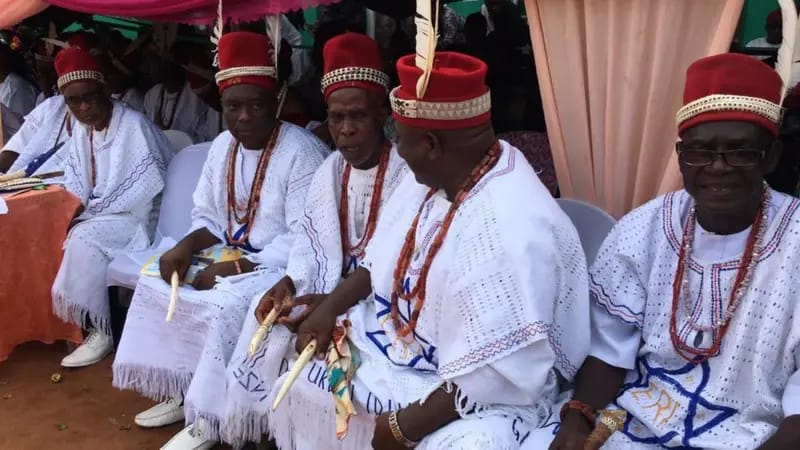
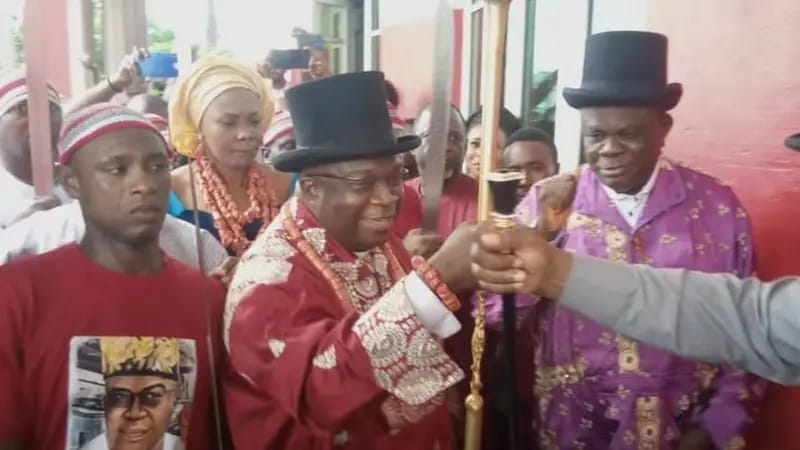
Nigeria Matters: Ikwerres and Their Denial of Igbo Identity Written by Ikechukwu A. Ogu April 19, 2010 This is a rejoinder to Mr. Okachikwu Dibia’s article entitled “Ikwerre-Igbo Relationship As Seen By Ohaneze Nd’Igbo” published on www.gamji.com wherein he attacked a comment reportedly made by the President of Ohaneze Nd’Igbo, Chief Ralph Uwechue, that the Ikwerres are Igbos who now deny their true ethnic identity. It is an established fact that there are indigenous Igbo-speaking peoples in Rivers, Delta, Edo and Cross River States. My mission here is not to urge the Ikwerres and other Igbos who behave alike to admit being Igbo. Rather, I intend to correct some historical gaffes, deliberate distortions and logical fallacies contained in Mr. Dibia’s write-up, and state the truth as I know it. It amuses me when indigenes of Igbo-speaking communities outside the South-East deny their Igbo identity. The Ikwerres, represented by the likes of Okachikwu Dibia, are the fiercest and most strident in this act of playing the ostrich. The renowned writer Elechi Amadi, an Ikwerre man, restated this renunciation before the Oputa Panel in 2004 but was reminded of his Igbo name. Ironically, he is quoted to have upheld the Igbo origin of Ikwerres in one of his writings. Howbeit, Igbos in South-East Nigeria justifiably regard the Igbo-speaking areas of Rivers State (Ikwerre, Etche, Ogba, Ekpeye, Opobo, Ahaoda, Ndoni, Egbema, etc) as their kith and kin. On the other hand, the Ijaws and other non-Igbos of Rivers State also rightly refer to these communities as Igbos, and even claim that Rivers State has been under Igbo rule since 1999! Generally, a person’s native name, mother-tongue, pedigree and ancestral geographical location define his race. But this may not be so in cases where an individual bears a name and speaks a language unrelated to the one associated with his ancestors. However, when the indigenes of an entire community speak as their mother tongue a language associated with a particular race, bear names borne only by persons of that race, share boundaries with communities within that race and have traditions similar to theirs, then the inescapable conclusion is that they belong to that race. This is the place of Ikwerres and other Igbo-speaking communities in Rivers, Delta, Edo and Cross River States vis-à-vis the Igbos of the South-East. The Austrians and indigenes of Sudetenland in Czech Republic speak German, bear German names, have traditions similar to those of the Germans and share boundaries with Germany, although they find themselves in distinct countries. This is also true of the Yoruba-speaking peoples found in Edo, Kogi and Kwara States as well as in Benin Republic. Just recently, a monarch from Benin Republic visited the Alaafin of Oyo and acknowledged his Yoruba roots. Another exception to the above is where the community was a vassal to or colonized by the race whose language and names they speak and bear, as seen in Northern Nigeria where the Hausa-Fulanis have administrative and religious hegemony over many minority tribes sequel to Usman Dan Fodio’s 19th century jihad. Even so, indigenes of such a community still retain their native names, language and traditions. Contrary to Mr. Dibia’s fictitious claim, there was no time in history that Nd’Igbo colonized or dominated the Ikwerres or any other community let alone imposed Igbo names on them. They never desired or attempted it. Owing to its republican and egalitarian nature, the Igbo race was never organized administratively as to colonize others. Had this happened prior to British rule in Nigeria, same would have been noticed and documented by the Europeans. Does Mr. Dibia regard the period when the entire South-East and South-South formed one Eastern Region of Nigeria as the period of Igbo colonization? That would be absurd. This warped idea means that, perhaps, only Ikwerres were so “colonized”, for no other community has alluded to it. If Nd’Igbo imposed the name Ikwerre on Mr. Dibia’s people, did they also force other communities to address them as such? The Hausas call the Afizere people of North-Central Nigeria and Igbos Jarawa and Nyamiri (corrupted form of nye m miri – Igbo expression for “give me water”) respectively, yet every other ethnic group calls them by their real names. Besides, some people have pet names for their towns, as the Aros call Arochukwu Okigbo. I presume this to be the case with the name Iwheruoha which Mr. Dibia claims as the original name for Ikwerre. What I know is that Ikwerres and other Igbo-speaking peoples of Rivers State call Igbos of the South-East Isoma and vice versa. Furthermore, was Ikwerre ruled by the 19th century King Jaja of Opobo, an ex-slave from Amaigbo in Imo State who transformed to king of Opobo (Igwe Nga) in present-day Rivers State? Even so, that is not tantamount to colonization by Nd’Igbo. However, the case of Jaja shows that some of the present-day non-Igbo indigenes of Rivers and Bayelsa States may be descendants of Igbo slaves who escaped exportation overseas and settled in the midst of Ijaws, gradually acquiring a semblance of the latter. For instance, a friend of mine from a community in Yenagoa told me that Igbo words and expressions constitute about seventy percent of their vocabulary. History has not credited the Aros (Ndi-Aru) with colonialism, as we know it, although many of them travelled and settled around several parts of Igboland and beyond as merchants of goods and slaves and messengers of the Long Juju. Prior to the advent of Christianity, the Long Juju was voluntarily employed by its Igbo and non-Igbo adherents for traditional adjudication, divination and resolution of spiritual problems; it was regarded then as the earthly abode of God (Ihu Chukwuabiama). Today, as a legacy of our interaction with Ndi-Aru, some families in my town bear names like Nwaru and Uzoaru, yet they neither colonized us nor had any settlement in my town. Let Mr. Dibia tell us. Between what dates in history did Igbos colonize Ikwerres? Who were the Igbo administrators? Where, when

Ikwerres and Their Denial of Igbo Identity Read More »
ARE UKWUANI BENIN OR IGBO

ARE UKWUANI BENIN OR IGBO The identity of Ukwuani people has for some time now generated debate among their leaders, ethnic historians, and other scholars of Ukwuani extraction. Such debates have produced a dominant perspective that the Ukwuanis are Benin people in diaspora without going to the field to confirm such a claim. This paper, therefore, participated in the on-going debate. The historical method of descriptive analysis was deployed. This method is most appropriate for this work because it offered the opportunity to interrogate the traditions of origins of the different Ukwuani clans. The findings indicate that Ukwuani people are Igbo in origin, and the claim of origin from Benin which textbook generalizations tended to portray is a recent contraption made possible by feedback in oral tradition. Introduction A common problem among many African societies is the issue of origin, and it touches the very foundation of the identity of a people. Yet, the traditions of origins of many societies pose problems to the historian because, as Atanda has noted, questions about origin form parts, indeed constitute the first of the natural series and sequence of questions which homo-sapiens must ask. Such questions constitute an index of man’s historical consciousness. If they are lacking, then, man ceases to be a ration being (63). This is why man has insistently demanded to know himself and where he came from to his present location. It is because of the need to meet this insistent demand as Afigbo observes, “that scholars have continued, and will continue, to blunt the cutting edge of their intellectual weapon by striking at this interactive problem” (64)). The Ukwuani is no exception in this regard. They want to know who they are and where they came from. The Ukwuani is one of the three sub groups that make up the Igbo west of the River Niger; the others are Enuani and Ika. These three sub groups are now collectively regarded as Anioma (Good Land), geo-politically located in Nigeria’s Delta State. Within the Western Igbo area, the Ukwuani inhabit the low-lying and swampy area within latitude North 5’ 50 – 70 and Longitude East 6’ – 6’- 50 according to Mallison. In Forde and Jones’ classifications, the Ukwuani people are regarded as Southern Ika Ibo (48). It comprises fifteen clans, namely Abbi, Akoku, Amai, Ebedei, Emu, Eziokpor, Ezionum, Obiaruku, Ogume, OnichaUkwuani, Umuebu, Umukwuata, Umutu, Utagba Ogbe and Utagba-Uno. The name Ukwuani is a topographical construct deriving from their environment. It means low- land dwellers which conform to the Igbo way of naming their settlement according to the geographical features. The origin of Ukwuani people has received attention from scholars. For instance, Okolugbo believes that three migration waves led to the peopling of Ukwuani country. He claims that the first and second waves during the 15th and 17th centuries respectively came from Benin kingdom. He attributes the third wave which he claims was a mixture of Benin and Igbo migrants to the founding of Aboh and UmuNze clans of Umukwata, Amai, Orogun, Abbi, Amai, and the Akashiada group of communities (6). He further describes the founders as Edo conquerors who carried expedition to Aboh, where they sojourned before moving down to the present site of Umukwata, from where the rest communities or clans were founded. In the same vein, Ozah traces the origin of the Ukwuani people to Benin, claiming that their forebears were Benin people who came to settle in what is now Ukwuani land. Okolugbo and Ozah clearly make sweeping generalizations that Ukwuani people are Benin in origin without investigating the history of different Ukwuani clans and communities. Recent study by Ojieh attributes the peopling of the Ukwuani area to two main migration waves, the first from Benin towards the end of the 15th century and the second being those ofEastern Igbo in the early part of the 16th century. He though talks about the third group who claims autochthonous origin dating into antiquity. However, Ojieh does not focus on Ukwuani origin which is why details of the early history of the people are not provided. In general, the dominant narrative is that Ukwuani people are Binis in diaspora. This branch of historiography is now held by some who make references to “Ethnologue” that classifies Ukwuani as an ethnic group outside the larger Igbo ethnic group. Often, what comes from their claims do not reflect the historical reality. As a result, the people’s past is distorted and they now found themselves contending with identity crisis. This is why many of them now say they are not Igbo but Ukwuani, implying that they sprouted from the ground where they are found today. But with exception to Biblical creation in the Garden of Eden, no human group sprouted from the ground or descended from heaven, which is why the historian must focus on finding the place of ancestral origins. Of course, the process of defining who is Igbo and who is not has had important social and political consequences, and therefore, warrants our attention here with the case of Ukwuani. Traditions of Origins and Migrations As Isichei says, the history of many people begins with a migration and a founding father (19), and these histories are contained in the peoples’ traditions which are either in recorded form or orally transmitted to the researcher historian. Thus, this section interrogates the traditions of origins of Ukwuani clans. Abbi Clan According to tradition, Abbi clan was founded by one Amachafrom Echalla-Ukwu in Igbo country east of the Niger. Amacha and his brother (Ukwata) are said to have gotten to Aboh in one of their hunting expeditions, and sojourned there, where they met Effi and Amai, with whom they migrated to Ukwuani hinterland as a result of a quarrel with the Aboh people, in the course of which they founded the Elovie quarters of Abbi which were jointly called Kanyibilinebeni (let us settle here) later shortened to Abbi Echalla (Ezulu). This was after Amacha had established his presence and authority in the new

ARE UKWUANI BENIN OR IGBO Read More »

Olu Ndigbo Di N’Iche N’Iche

Olu Ndigbo Di N’Iche N’Iche Onitsha, Enuanị, Nsukka, Owerri na olundị ndị ọzọ dị n’Igbo na njirimara ha Ụmụnwaanyị Delta igbo na-asụ n’olu, nolu mana a kwaa ụkwara, ọ bụrụ otu. E nwere ọtụtụ olundị dị iche iche mana asụsụ Igbo bụ otu. N’ezie, obodo ọbụla n’Igbo nwere olu nke ha na-asụ mana ndị ọkammụta mere nnyocha olundị a niile ma chịkọta ha were kwuo na asụsụ Igbo nwere olundị karịrị otu narị. Ịgba ndụ, Orịkọ na ụzọ ndị ọzọ Igbo ji ekpezi esemokwu oge gboo Igbo History: Ọgụ Biafra abụghị mbụ Igbo na-egosi ‘ofu obi,’ Ị ma maka ‘Igbo Landing’? Lee ndị Igbo nwere olileanya na Israel ga-anabata ha dịka ndị Jew Ụfọdụ n’ime ha gụnyere; Ịka, Enuanị, Nsụka, Izzi, Ezaa, Ikwere, Ọhụhụ, Owerre, Ọnịcha wdg. Igbo Izugbe Ọtụtụ mgbe, ụfọdụ ndị Igbo na-adọrịta ụka banyere mpaghara Igbo nwe Igbo Izugbe nke a na-akpọ ‘Standard Igbo’ na bekee. Ọ bụ ụdị asụsụ Igbo nke a ka e ji ede ihe ma bụrụkwa nke e ji akụzi ma na-ele Waec. Ụfọdụ na-ekwu na ọ bụ Owere, ụfọdụ asị na ọ bụ Igbo Ọnicha, mana nke bụ eziokwu bụ na ọ bụ olundị di iche iche ka a chịkọbara ọnụ iji mebe ya bụ Igbo Izugbe. Uru 12 ọmụ baara ndị Igbo Ndị Igbo sị na ha abụghị Igbo na ihe kpatara ya Dịka Ọkammụta Chigozie Nnabuihe, onye nkuzi Igbo na mahadum ‘University of Lagos’ siri kwuo, “o nweghị ndị (Igbo) enweghị okwu ha n’Igbo Izugbe”. Ọ bụ n’ihi oke ndịiche dị n’olundị mere ka ndị ọkachamara Igbo n’aha otu ‘Society for Promoting Igbo Language and Culture (SPILC)’ jiri jikọta were hazie Igbo Izugbe n’afọ 1971/72. Ha chịkọtara Igbo nke ndị ụka CMS bụ ‘Union Igbo’, ‘central dialect’ nke Ụka Katọlik, ‘Isuama Igbo’ nakwa okwu mbite ndị adịbughị n’okwu Igbo. Tupu nke a, ndị ụka CMS na ndị Ụka Katọlik bụ ndị nwere olu Igbo nke ha ji ede akwụkwọ ha n’asụsụ Igbo na-eme ndị kwe na ndị ekweghị, dịka ha na gọọmentị dọrịtara ọtụtụ afọ gboo nke e ji mee ‘standard Igbo.” Kedụ ihe mere asụsụ Igbo ji dị iche iche? Ndị ọkammụta Igbo nwere ụzọ dị iche iche ha sị akọwa ihe kpatara ndịiche n’asụsụ Igbo. Ụfọdụ na-ekwu na ihe nwere ike ibute ndịiche n’olu asụsụ Igbo gụnyere; agbataobi onye, njem na azụmahịa, na ihe ndị ọzọ. Onye ya na ibe ya bụ agbataobi ga-enwe otu olu. Ọbụladị ma ha nwee olu ndị dị iche iche, onye ya na ibe ya na-emerịta njem maọbụ na-azụkọ ahịa ga-asụ Igbo n’ụdị ibe ya ga-eji aghọta ya. O kwukwara na Igbo si mpaghara Alaigbo ọzọ nọkọọ, ha na-ahazị olundi nke ha ka ọ dịtụ ka Igbo ndị Ọnịcha. Nke a bụ maka na e ji nnukwu anya ele ndị Ọnịcha n’ihi na ha so na ndị ha na ndị ọcha bu ụzọ mekọọ ihe dịka azụmahịa, agụmakwụkwọ nakwa mgbasa oziọma. Ikuku, Osimiri, Ugwu na Ndagwurugwu Na nkọwa ya, Ọkammụta Nnabuihe, sị na ọ bụ mmiri, ikuku, ugwu na oke ọhịa na-eweta adịmniche n’ihe mmadu na ibe ya na-asụ. Nnabuihe sịrị, “ikuku nwere ike ikusasi ụda okwu si n’ọnụ okwu na-abanye na ntị mmadụ nke nwere ike ibute nnụhie.” “Nnụhie nwekwazịrị ike ibute mkpọhie.” “Ọ bụrụ na mmadụ abụọ na-akpa nkata nọrọ onwe ha nso, nnụhie ga-ara ahụ ịbata.” “Ya mere na ndị bi n’otu mpaghara ebe ha na-anụ onwe ha ọfụma ọfụma na-enwe otu olu.” “Mana ngwa ngwa e nwere ndị si mpaghara ọzọ, ebe dị anya na-anụ, ụda okwu ahụ si n’ọnụ mmadụ nwere ikuku dị ike na-ekusasị ya. ” “Ya kpatara, e nwee nnụhie, onye na-ekwu ekwu ga-agba mbọ ịhụ na onye na-anụ anụ nụtara ọfụma.” “Onye na-anụ anụ ga-agba mbọ ka ọ nụta ihe a gwara ya ọfụma. Nnụhie na-akpata mkpọhie.” Ya mere ụfọdụ ji akpọ “aha”, ụfọdụ akpọ ya “afa”. Maọbụ ụfọdụ akpọọ “ihe”, ndị ọzọ akpọọ “ife”. Ndagwurugwu: Nnabuihe sịrị na ọ bụrụ na okwu okwu nọ n’ugwu, ọnụ okwu nọrọ na ndagwurugwu, o nweghị ka okwu okwu ga-esi kwuo okwu, ọnụ okwu anụ ya kpọmkwem, “a ga-enwenata mgbanwe”. Osimiri: N’okwu etu osimiri si emetụta ndịiche n’olundị, Nnabuihe sị, “Osimiri, nwere ebe ọ na-ekwo ekwo, nwee ebe ọ na-aga nwayọọ. Etu o si nwee mgbanwe ka e si enwe mgbanwe n’olu ndị na-aṅụ ya.” “Ya mere onye gaa mba ọzọ nọọ ọnwa ole na ole sụwa asụsụ ndị ahụ, a sị na ‘ọ ṅụọla mmiri ha’.” Onye nọ n’ofe mmiri nke a na onye nọ n’ofe mmiri nke ọzọ, na-enwe adịmiche.” Oke ọhịa: Ọ kọwara na ụzụ ahịhịa dị n’ọhịa na-eme ma ikuku buo ya na-emetụta olundị. “O nyere nsogbu ka onye nọ n’akụkọ ọhịa nke a na onye nọ n’akụkụ ọhịa nke ọzọ ghọta onwe ha ọfụma.” Ugwu: Nnabụihe kọwara na ugwu nwere ike ịnọchi mmadụ abụọ na-ekwu okwu, “ọ bụrụ na ọ dịrị karịa, o nwere ike ịghọ asụsụ ọzọ”. Kedụ ebe ha si akpọpụta okwu ụfọdụ? Nnabuihe kọwara na adịmiche a na-enwe na ndị na-asụ otu asụsụ nwere ike bụrụ nke metụtara mpaghara okwu maọbụ okwu. Ihe ndị Bekee kpọrọ ‘plosives’, ‘fricatives’ na ‘affricates’. Iji maa atụ: 1. Agbọghọ (girl) = okporo (Onịcha)= mgbọtọ (Owere)= Okposho (Ịka) =okpoho (Enuanị). 2. A nabatara akị na akụ n’Igbo Izugbe mana olundị dị iche nwere ihe ha na-akpọ ya: Akụ (palm kernel) = mkpịrị (Owere) = mkpọkịrị (Mbieri) = agba (Mbaitoolu) 3. Ikwe (mortar) = oshibo (Owere)= otiwe (Mbaise), etiri (Ọlụ) = Onicha 4. Ngaji (spoon) = Ngazị (Ọnịcha) nkọm (Ọhafia) Lee ndịiche dị n’olu ndị ụfọdụ: Olundị e nwere dị gụnyere Waawa, Enuani, Ngwa, Ohuhu, Etche, Olu, Ika, Anioma, Ukwuani, Ikwerre, Ezaa, Izzi, Ekpeye, Ohafia, Abam wdg. Ma lee ndị iche dị n’ụfọdụ olundị ahụ: Nsụka/sh/ = Owere /h/= Onicha/r/ = Enuani/sh/= Ika/h/Mgbochiume /h/ dị n’ahụ (body) bụ /sh/ na Nsụka (eshụ); /r/ n’Ọnịcha(arụ), /sh/ n’Enuani (ashụ), /h/ n’Ịka (ehụ), /h/ n’Owere(ahụ).Ya bụ ndị Nsụka na-akpọ ahụ (body) ‘eshụ,’; ndị Ọnịcha na-akpọ ya ‘arụ’; Owere na-akpọ ya ‘ahụ’; ebe ndị Enuani na-akpọ ya ‘ashụ’. Nsụka /gh/= Owere/ gh/= Onicha /w/=Enuanị /w/= Ịka /h/Ọmụma atụ: Ndị

Olu Ndigbo Di N’Iche N’Iche Read More »

Scroll to Top